Septic tank pumping in Vallejo runs from 150 dollars to 300 dollars for a standard daily service call, with most homes landing in the middle of that range depending on tank size and access, a factor also covered on our porta potty placement guide for related site work. A weekend call costs more. Get an exact number with a septic pumping service quote before the truck rolls.
Most Vallejo households pay somewhere in the 150 to 300 dollar band for a routine pump-out, and that figure covers the truck, the labor and standard disposal. Where your number lands inside that range depends on how big your tank is, how deep it's buried, and whether the crew has to dig to find the lid. A 1,000 gallon tank is common in older Vallejo neighborhoods, and tanks that size generally take longer to service than smaller ones, which nudges the price toward the top of the band, similar to how dumpster rental cost climbs with size and access. If you're scheduling around a weekend, expect a premium call rate rather than the weekday figure, much like the jump you'd see checking porta potty rental per day pricing against a weekend rate. For a broader comparison across service types, the septic tank pumping cost numbers here pair well with our page on septic tank cleaning, which covers what actually happens once the tank is open.
| service | duration | low | typical | high |
|---|---|---|---|---|
| septic pumping | day | 150 | 250 | 300 |
| septic pumping | weekend | 50 | 100 | 150 |
Note the weekend band above reflects a shorter, add-on style visit rather than a full pump-out, so confirm which service your quote actually covers.
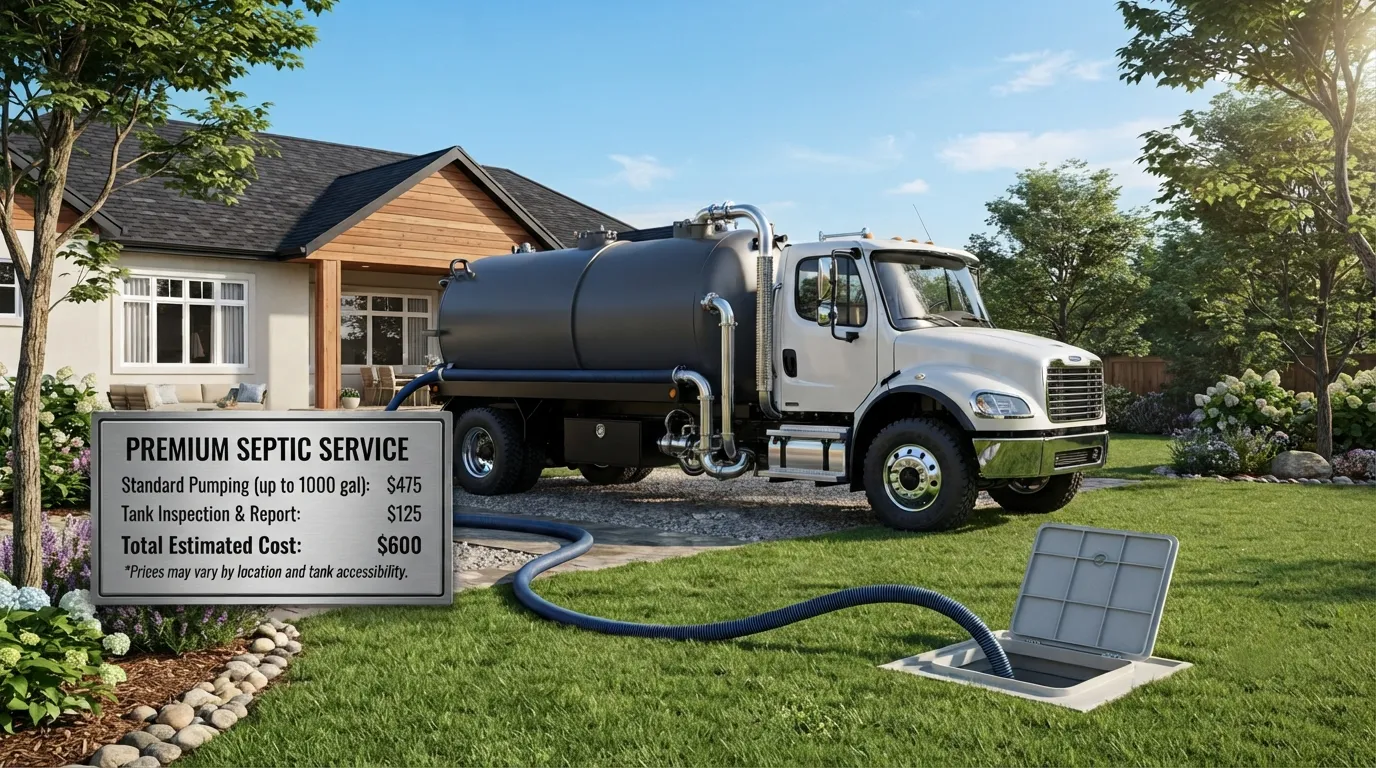
Tank size drives most of the swing in septic tank cleaning prices, and access is a close second. A residential septic tank is typically pumped every 3 to 5 years, and that interval depends on tank size and household size, so a family of five on a small tank might be due sooner than a couple on a 1,000 gallon system. Crews also charge more when the lid is buried under landscaping, decking or a driveway extension, because digging adds time before the actual pumping starts. If your property has a grease interceptor instead of, or alongside, a standard tank, know that a grease interceptor gets pumped once fats, oils, grease and solids reach 25 percent of the liquid depth, not on a fixed calendar, and that's a different pricing conversation covered on our grease trap pumping page, distinct from the tank sizing questions answered on dumpster sizes and dimensions for other site equipment. Homes near Benicia, about 7.8 miles east of Vallejo, and American Canyon, 6.2 miles north, see similar pricing patterns since crews service both areas on the same routes, the same routes covered on our service areas page. If your tank hasn't been serviced in years, check our septic tank warning signs page before you wait for a backup to force the issue.
A 1,000 gallon tank simply holds more waste, so it takes longer to pump completely, and labor time is baked into every quote. Crews also have to haul more volume to disposal, which can push the invoice toward the higher end of the 150 to 300 dollar range rather than the low end. If your tank hasn't been pumped in over five years, expect solids to have compacted, which slows the job further. Our how often to pump a septic tank guide breaks down the 3 to 5 year interval in more detail, including how household size shifts that number, and pairs well with the septic tank warning signs checklist if you suspect you've waited too long. Homeowners near Hercules, 9.3 miles south of Vallejo, report the same size-driven cost pattern, since bigger tanks cost more to service everywhere, not just here. If you're building new or replacing a failing system, a holding tank rental can bridge the gap while work is underway, and that's billed separately from a standard pump-out, the same way a storage container rental is billed apart from restroom service on a busy job site.
Yes, commercial sites often pay more because tanks are larger and access can be tighter around loading docks or landscaping. A restaurant or event venue in Vallejo may also need a grease interceptor serviced on its own schedule, separate from the building's septic system, and that's priced differently than a residential pump-out. Construction sites handle sanitation differently altogether: OSHA 1926.51(c)(1) sets toilet ratios for job sites, starting at one facility for 20 workers or fewer, which is why most active builds rent portable units rather than tie into septic service at all. If you're staffing a job site, our construction site services page and the porta john rental option both cover that need, and the how many porta potties do i need guide helps size the order before you call. Farms and agricultural operations fall under a different rule, OSHA 1928.110, which requires field sanitation facilities within a quarter mile walk of hand-labor employees, and our farm and agricultural restrooms page covers that separately from septic pricing, alongside the handwashing station rental options many farms add for the same crews.
Yes, an emergency or same-day call typically costs more than a scheduled weekday appointment, and that's standard across the industry, not specific to Vallejo Porta Pros. A backed-up line or overflowing tank can't wait for a routine slot, so crews prioritize it and charge accordingly. If your system backs up on a weekend, expect the higher weekend-rate range rather than the standard weekday band. Our emergency septic service page walks through what qualifies as urgent versus what can wait a few days, much like the emergency porta potty rental page does for a job site restroom crisis. Vallejo homeowners near Martinez, roughly 14.3 miles southeast, and San Pablo, about 14.2 miles southwest, use the same emergency dispatch logic, since response speed matters more than location once a tank is actively failing. If you're not sure whether your situation is urgent, the warning signs page linked above is a faster read than guessing.
A residential septic tank is typically pumped every 3 to 5 years, though tank size and household size shift that number in either direction. Smaller tanks or larger households often need service closer to the 3 year mark. Check our how often to pump a septic tank page for a fuller breakdown.
Most standard pump-outs fall between 150 and 300 dollars for a weekday service call. Where you land depends on tank size, access and how long it's been since the last pumping. Get a firm number through request a quote before scheduling, or browse our about page and contact page if you'd rather talk it through first.
Yes, larger tanks like a 1,000 gallon system generally cost more to pump than smaller residential tanks, since crews spend more time on-site and haul more waste. Buried or hard-to-reach lids add time too, regardless of tank size.
Yes, but weekend service costs more than a standard weekday appointment. If timing is flexible, a weekday slot keeps the cost closer to the lower end of the standard range.
Septic tanks run on a multi-year schedule based on household size, while a grease interceptor is pumped when it reaches 25 percent solids, which can happen much faster. Restaurants and commercial kitchens need the grease trap service separately, detailed on our grease trap pumping page.
Yes. Vallejo Porta Pros delivers septic tank pumping cost across Vallejo and the surrounding metro, with same-day and next-day drop-off available on most orders.
Pricing depends on the unit and how long you need it. See our cost breakdown and request a free quote for an exact figure.
Standard rentals include scheduled service — a pump-out, a clean, a restock and fresh deodorizer. Busy or hot-weather sites can be serviced more often.
Call now or request a free quote — clean units, on-time delivery, transparent pricing.